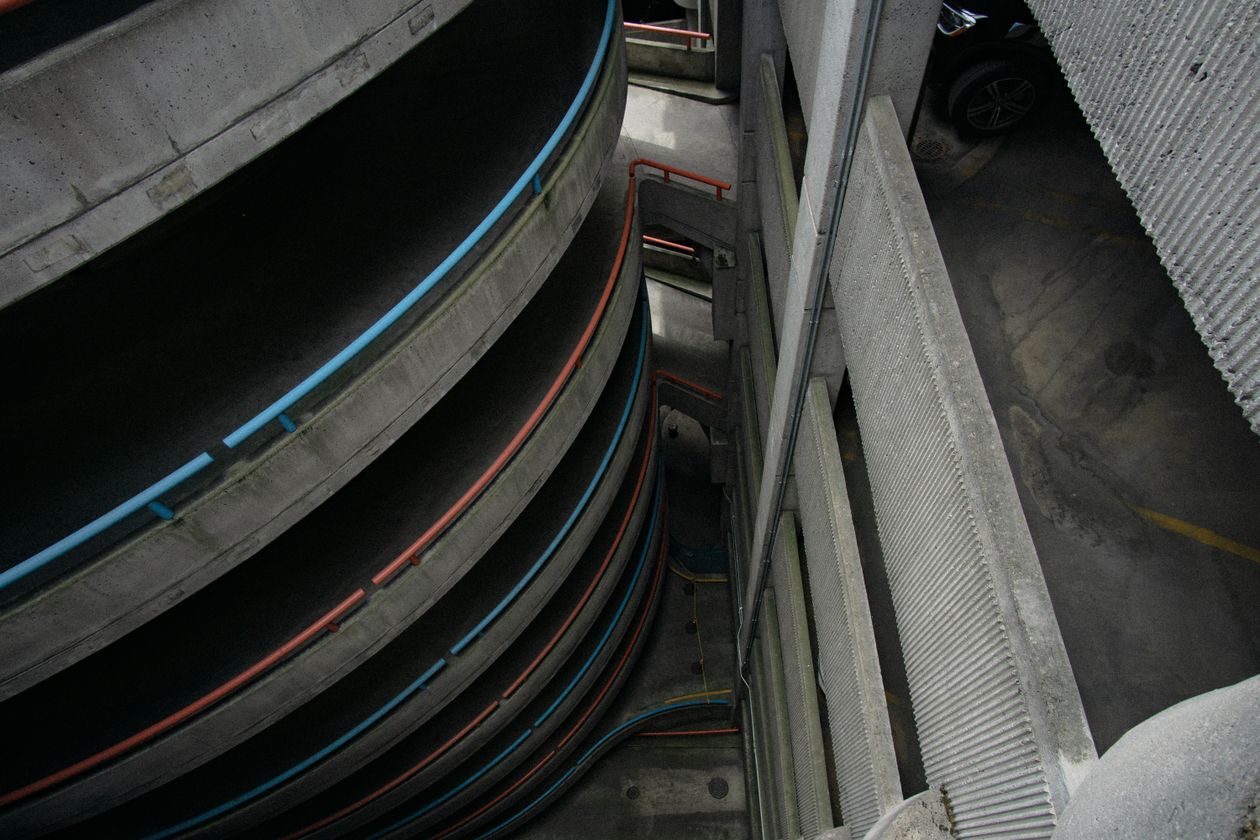
A parking garage slab assessment is a non-destructive evaluation of a suspended concrete deck's condition, using methods like ground-penetrating radar and corrosion mapping. In Quebec, elevated parking structures need a documented owner check each year plus periodic engineer verification to confirm the slab remains structurally safe.
Every winter, Quebec's elevated parking decks absorb a punishing mix of road salt, meltwater, and freeze-thaw pressure. A timely parking garage slab assessment is how owners catch the damage those forces cause before it becomes a structural emergency. The tricky part is that most of that damage stays hidden inside the concrete.
By the time a slab shows visible cracks, spalling, or rust stains, corrosion may have been advancing for years. This guide breaks down what these evaluations measure, which non-destructive methods professionals rely on, and exactly when a Quebec building owner should book one.
What a parking garage slab assessment actually measures
A slab evaluation looks past the surface to judge the real condition of the structural concrete and the steel inside it. Technicians document existing defects, map embedded reinforcement, and estimate how far deterioration has progressed. The result is an objective baseline rather than a guess.
Typical findings include active reinforcement corrosion, delamination where the concrete has separated in layers, internal voids, honeycombing, and moisture ingress paths. Each of these weakens the deck's ability to carry vehicle loads safely over time.
The difference between a slab-on-ground and a suspended slab
The distinction matters. A slab poured directly on the ground is supported by the soil beneath it, so a failure rarely means collapse. A suspended slab, which forms the driving surface of an elevated or underground deck, carries its own weight and every vehicle on it.
That structural role is exactly why regulators treat these decks differently, and why a professional non-destructive structural assessment in Quebec City focuses so heavily on suspended slabs, beams, and columns.
Why Quebec parking structures deteriorate faster
Quebec's climate is unusually hard on concrete decks. Repeated freeze-thaw cycles combined with de-icing salts drive chloride-laden water deep into the slab, where it reaches the reinforcing steel and triggers corrosion. As the steel rusts, it expands, cracking and spalling the concrete from within.
Vehicles track that salty slush directly onto interior decks all winter, so even sheltered garages are exposed. The cumulative effect is steady, mostly invisible loss of structural capacity.
Common accelerators of parking deck deterioration in the province include:
- Chloride penetration from road salt carried in by vehicles
- Freeze-thaw expansion that widens micro-cracks each season
- Poor or aging waterproofing membranes that let water pond
- Blocked drains that trap moisture against the slab surface
- Original construction defects such as insufficient concrete cover over the rebar
Non-destructive methods used to evaluate a parking deck slab
The goal of non-destructive testing is simple: gather reliable data about the slab without breaking it apart. Combining several complementary techniques gives a far clearer picture than any single test on its own.
Ground-penetrating radar
Ground-penetrating radar (GPR) sends radio pulses into the concrete and reads the reflections. It maps rebar layout, measures concrete cover, and flags voids or embedded conduits before any coring or cutting. This is the same core technology behind precise concrete scanning with ground-penetrating radar.
Half-cell potential and corrosion mapping
Because corrosion is the leading threat to Quebec decks, locating it early is critical. Half-cell potential readings measure the electrical activity of the reinforcement to identify where steel is actively corroding, even when the surface still looks intact. Detailed corrosion mapping surveys turn those readings into a plan showing exactly which zones need attention.
Impact-echo and infrared thermography
Impact-echo uses stress waves to detect delamination and internal flaws, while infrared thermography reveals subsurface defects by reading small temperature differences across the slab. Together they confirm where the concrete has begun to separate in layers, a frequent precursor to spalling.
Planning maintenance on an aging deck? A professional non-destructive survey before your next repair cycle helps you scope the work accurately and avoid paying to fix concrete that is still sound. Explore the full range of concrete testing services to match the right method to your structure.
When to schedule a parking garage slab assessment
Timing is partly set by law and partly by condition. Under Quebec's Building chapter of the Safety Code, owners of buildings with an elevated parking garage must complete a documented visual verification every year, while an engineer must perform an in-depth verification every five years, with the first one due between 12 and 18 months after construction is completed.
Those are minimums. Certain warning signs mean you should not wait for the next scheduled cycle to arrange a parking garage slab assessment.
Book a survey sooner when you observe:
Catching problems between mandatory inspections can keep small, targeted repairs from growing into larger reconstruction work.
- Fresh spalling, exposed rebar, or rust stains on the ceiling or columns
- Persistent leaks, efflorescence, or water pooling on the deck
- New or widening cracks in the slab, beams, or supports
- A planned renovation, change of use, or heavier loading on the structure
- An upcoming sale, refinancing, or purchase requiring due diligence
What happens during and after the survey
During a parking garage slab assessment, a field team collects data across the deck, correlating radar, corrosion, and delamination readings to build a condition map. For elevated structures, that diagnostic work supports the engineer responsible for the regulated report and any repair action plan.
You should expect a clear deliverable that pinpoints affected areas, ranks their severity, and gives your engineer or property manager the evidence needed to prioritize work and budget. Good data narrows the repair scope, which can limit long-term cost and disruption to parking operations.
Conclusion
A parking garage slab assessment is a practical way to protect an elevated deck against Quebec's freeze-thaw and salt exposure, because it reveals hidden corrosion and delamination while repairs are still small. Staying ahead of both the regulatory schedule and visible warning signs keeps your structure safe and your budget predictable. If your deck is aging or showing early symptoms, speak with a testing specialist to plan the right non-destructive survey for your building.