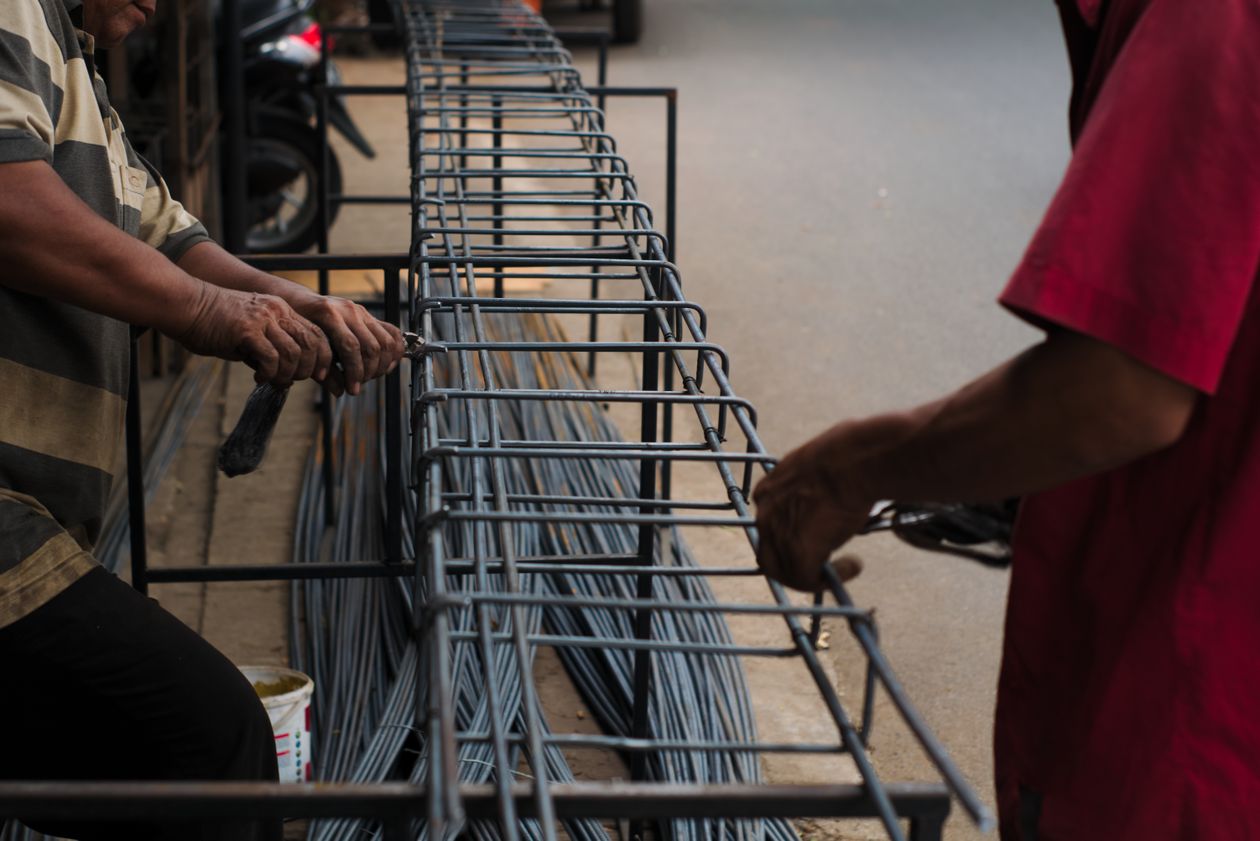
Rebar detection in concrete uses ground penetrating radar to locate steel bars, post-tension cables and conduits hidden inside a slab or wall before drilling, coring or cutting. A technician scans the surface, maps embedded elements, and marks safe zones, preventing structural damage, injury and costly repairs on the job.
Every experienced contractor knows the sound of a drill bit hitting steel. In a reinforced slab, that moment can mean a weakened structure, a severed electrical conduit, or a project that grinds to a halt. Knowing exactly what sits inside the concrete before the first hole is made changes how the entire task gets planned, priced and executed.
What rebar detection in concrete really means
Rebar detection in concrete is the process of locating reinforcing steel and other embedded items inside a slab, wall or column before anyone drills, cores or saw cuts. Reinforced concrete hides a network of rebar, post-tension cables, electrical conduits, plumbing and data lines. None of it is visible from the surface, yet cutting into any of it can be dangerous and expensive.
Modern surveys rely on non-destructive testing, meaning the concrete is never touched by a bit or blade while the interior is being mapped. A technician gathers data about what lies below the surface and translates it into marks a crew can trust. This family of methods is reviewed in nondestructive testing guidance from the American Concrete Institute, which summarizes how each technique evaluates concrete and its reinforcement.
Why locating steel before drilling or cutting matters
Cutting blindly into a structural element is one of the most avoidable risks on a job site. A single misplaced hole can turn a routine anchor installation into a structural repair. The stakes fall into a few clear categories.
Mapping the interior first removes most of that uncertainty. It is also why many teams scan first before renovation, demolition prep and mechanical installations on busy urban sites, from downtown towers to parking structures. For projects in the Montreal area, see concrete scanning in Montreal.
- Structural integrity. Severing a rebar or a post-tension cable can reduce the load capacity of a slab or beam and trigger an engineering review.
- Worker safety. Striking a live conduit or a hidden water line can cause electrical shock, arc flash or flooding.
- Direct cost. Damaged reinforcement, ruined equipment and emergency repairs add up quickly.
- Schedule impact. A single strike can stall a crew while a fix is designed and approved.
How ground penetrating radar sees through concrete
Ground penetrating radar, or GPR, is the workhorse of modern rebar detection in concrete. It is fast, portable and needs access to only one side of the element being scanned.
The physics behind GPR
A GPR unit sends short pulses of high frequency electromagnetic energy into the concrete through an antenna held against the surface. When those waves reach a boundary between materials with different electrical properties, such as concrete meeting steel or an air void, part of the energy reflects back to the antenna. The device records the time each echo takes to return, which lets the technician estimate both the position and the approximate depth of the object. The method, its equipment and its interpretation are described in the ASTM D6432 standard guide for the surface GPR method.
As the antenna rolls across the surface, these reflections build into a cross-section of the interior that a trained eye can read in real time.
What GPR can and cannot detect
GPR is versatile, but it is not an X-ray, and understanding its range keeps expectations realistic.
The signal weakens with depth, and a dense upper layer of steel can hide what sits beneath it. Very wet concrete also absorbs energy and shortens the useful range. Recognizing these limits is part of a professional interpretation rather than a flaw in the method.
- Reinforcing steel and welded wire mesh
- Post-tension and prestressing cables
- Electrical conduits and metal piping
- Voids, honeycombing and some plastic conduits
- Overall slab thickness and the location of the back wall
The concrete scanning process step by step
A reliable scan follows a repeatable sequence rather than a single quick pass. On most projects, the work unfolds in a predictable order.
1. Define the target area. The crew confirms where holes or cuts are planned and reviews any available drawings. 2. Prepare the surface. Loose debris, standing water and coatings are cleared so the antenna keeps steady contact. 3. Scan in a grid. The technician runs overlapping passes in two directions to capture bars running each way. 4. Interpret in real time. Reflections are read on screen and cross-checked between passes. 5. Mark the surface. Located rebar, cables and conduits are drawn directly on the concrete, along with clear zones. 6. Document the findings. Results can be recorded so the information stays available for the next phase.
Because each element is marked in place, the drilling or cutting crew works from a physical map rather than a guess. That same interior data often feeds a broader structural assessment of a concrete element when condition and reinforcement layout both matter.
Before scheduling any core or saw cut on a reinforced element, it pays to have a qualified team map the interior first. A short project review with a scanning specialist can confirm exactly where the steel and services run, so the crew arrives ready to work.
What affects the accuracy of a scan
No two slabs behave the same way under a radar antenna, and several factors shape how clearly the interior appears.
Concrete age and moisture change how the signal travels, since fresh or saturated concrete absorbs more energy. Congested reinforcement, such as a tight double mat of bars, can make it harder to separate individual elements or to see past the top layer. Surface condition matters too, because coatings, unevenness and debris interfere with clean antenna contact.
Antenna frequency is another lever. Higher frequencies give sharper resolution near the surface, while lower frequencies reach deeper at the cost of fine detail. An experienced operator chooses the right setup for each element and adjusts the scanning direction to get the clearest picture. This blend of the right equipment and skilled interpretation is what separates a rough guess from dependable concrete scanning services that crews can build on.
When to book a scan for your project
Scanning earns its place any time a tool is about to enter existing concrete. Anchor and dowel installation, plumbing and electrical penetrations, coring for ducts, saw cutting for openings, and demolition planning all benefit from knowing the reinforcement layout in advance.
It is especially valuable on post-tensioned slabs, where cutting a single cable can be both dangerous and structurally serious. Booking the scan a step ahead of the drilling crew keeps the schedule intact and lets the design team react calmly if a planned location needs to shift by a few centimetres.
Conclusion
Rebar detection in concrete turns a blind, high risk task into a controlled one. By mapping steel, cables and conduits before drilling or cutting, a GPR survey protects the structure, the crew and the budget, while keeping the project on schedule. It is a small, non-destructive step that prevents some of the most expensive mistakes on any concrete job. If a core, anchor or saw cut is coming up, request a pre-drilling scan before the first hole goes in.